Showing posts with label Dog Influenza. Show all posts

Monday, December 3, 2012

PETS, THE FLU, AND YOU


Influenza, commonly known as the flu, is an infectious disease of birds and mammals caused by a virus of the family Orthomyxoviridae, the influenza viruses. The most common symptoms in humans are chills, fever, sore throat, muscle pains, headache (often severe), coughing, weakness/fatigue, and general discomfort...from: http://en.wikipedia.org/wiki/Influenza

Now that we have moved into the month of December, the seasonal surge of human influenza has begun and it will remain to be seen if this is a typical year in which "only" 250,000-500,000 people die around the world from this disease.  Or, if it is a pandemic year, the deaths could go into the millions. 

Only in the last 10 years has a canine influenza virus been recognized as a cause of potentially serious disease in dogs.  This virus is not identical to the one that causes human influenza but it does bear a lot of similarities.  One of the main differences is that the canine virus can cause this disease year round rather than the seasonal occurrence that is seen with the human virus.  Without all of us becoming virologists, it's important to understand the significance of influenza viruses, how they might affect our pets, and whether or not we need to be concerned about an influenza virus moving from us to our pets or vice versa.


Dog Flu Reported in San Diego County
Canine influenza was first reported in Florida in 2004 and has spread across the United States
A dog has tested positive for canine influenza in what’s believed to be the first documented case in San Diego County.  Dawn Danielson, director of the San Diego County Department of Animal Services, confirmed the positive test result Friday from a dog at the county’s shelter in Bonita.
While this isn’t the first case in California, it is the first reported case in the county according to the department.
Dogs that are infected will show symptoms including a cough, runny nose and fever. Experts at the Centers for Disease Control and Prevention say a small proportion of dogs can develop severe disease.
The virus does not spread to humans; however, it can spread from dog to dog through a human’s touch.
If a dog has a cough, the American Veterinary Medical Association recommends that you schedule an appointment with your veterinarian so that he or she can examine and evaluate your dog and recommend an appropriate course of treatment.
Pet owners can also request a vaccine to protect their dogs from this influenza.

Adapted from: http://www.nbcsandiego.com/news/local/Dog-Flu-Reported-in-San-Diego-County-162420646.html


Vaccinate dogs for influenza virus

John DeVries, DVM, Diplomate ABVP (American Board of Veterinary Pathology)
Q. I heard about the canine influenza occurring in Bergen County (NJ) recently. How concerned about my dog’s exposure do I need to be?
A. While there is no reason to overreact to this disease, prevention by vaccination is the most prudent way to protect your dog from the canine influenza virus (CIV).
What you should know about canine influenza: Canine flu (CIV) is a virus in dogs which causes an acute respiratory infection. It has been identified in shelters, humane societies, boarding facilities and veterinary clinics across the country. This highly contagious virus is a recognized respiratory pathogen in dogs and causes a clinical syndrome that mimics "kennel cough."
Because New Jersey is one of the many states in which outbreaks of the CIV have occurred, more and more kennels, groomers and veterinary hospitals are requiring vaccination against CIV in any pets that are admitted to their facilities. About 80 percent of dogs infected will show clinical signs which include fever, malaise and prolonged cough. Of those showing clinical signs, some will develop a severe form of the disease which often involves a secondary pneumonia manifested by a thick yellow-green nasal discharge and high fever. These cases frequently require extended and expensive hospitalization stays in strict isolation with intravenous fluid, antibiotic, and respiratory therapy. In spite of the best treatment regimens it is estimated that 3 to 8 percent may die of the disease and its complications.
Exposure: Because the virus is carried in respiratory secretions, dogs are potentially exposed to the virus in any place where dogs are in close contact. The disease may also be spread by contact with contaminated items such as dog toys, blankets, clothes, and even hands. If your dog falls into one of these exposure categories, vaccination is highly recommended.
Presentation: Canine flu presents itself in two forms – a mild self-limiting form and a severe pneumonic form. Dogs with the mild form have a cough that will last for two to four weeks often accompanied by a mucoid nasal discharge. The severe form quickly turns into pneumonia with a high fever, lethargy and lack of appetite.
The incubation period is two to five days, after which clinical signs appear. Infected dogs may shed virus for seven to 10 days. Nearly 20 percent of infected dogs will not display clinical signs and become silent shedders and spreaders of the infection.
Testing: If your dog shows signs of coughing and/or nasal discharge you should contact your veterinarian, who can perform a blood test to rule out canine influenza.
Vaccine: A safe and effective vaccine is available from Intervet Schering-Plough Animal Health.
The vaccine has been shown to have virtually no side effects and is highly effective in either preventing infection or lessening the clinical signs and duration of infection and virus shedding.


Can Dogs Get the Flu?
Can dogs get the flu? This time of year is rough on people, with cold and flu viruses running rampant, but our canine friends can get sick, too. Because they cannot tell us their flu symptoms, it is important for us, as owners, to pay attention and know how to help them.

 
Canine influenza, or dog flu, is caused by a specific virus called H3N8. It used to be a horse disease, but it started showing up in dogs around 2004. Now that the virus has adapted into an illness that affects dogs, it is spread very easily. Flu symptoms in dogs include:
 •Cough
 •Runny Nose
 •Fever
 •Lack of Energy
 •Loss of Appetite
Fortunately, dogs rarely die from this illness. About 80 percent of dogs will contract at least a mild form of this sickness, because it is highly contagious and easily spread by respiratory secretions. If your dog is exhibiting flu symptoms, do not allow him to interact with other dogs, because the disease travels in airborne secretions, as well as contact with contaminated objects or people who have had contact with an infected dog. About 20 percent of dogs with flu symptoms can develop a more serious illness, like pneumonia.
People cannot catch canine influenza. However, flu strains mutate constantly, so it is a good practice to wash your hands and change your clothes if you have been exposed to a sick dog. In fact, it is a good idea to wash your hands after interacting with any dog, especially since some dogs with no flu symptoms can actually have the flu, and therefore transmit it to other dogs via human contact.
Your vet can test to confirm that your dog has the flu, using respiratory secretions or blood samples. Treatment typically includes medication to make your dog more comfortable and fluids to keep him or her hydrated. The vet may also prescribe broad-spectrum antibiotics, especially if a bacterial infection is suspected as well.
All dogs are at risk for the flu, but some have an increased risk. Your dog may be at high risk if he enters dog shows, boards at a kennel or attends doggie daycare, attends a dog training class, visits a dog groomer, plays at a dog park, or encounters other dogs on a regular basis. The best protection for your dog is the canine influenza vaccine. The vaccine not only protects against the flu, but also helps the dog get over flu symptoms sooner, if he is already infected.
...check with your veterinarian to see if the vaccination is a good idea for your pet's situation.
 
Can You Give the Flu To Your Dog or Cat?
As autumn arrives, the approach of flu season is a real concern. Last year, thousands of people suffered from symptoms including a high fever, chills and fatigue—classic signs of the flu. Some 2,374 people in the United States were hospitalized for influenza during the last flu season—an incentive for many of us to get an annual flu vaccine, to avoid both getting sick and potentially passing on the flu to family members.
A group of veterinarians at Oregon State and Iowa State Universities is now looking into the risk of flu for an unexpected population that doesn’t have access to human flu shots: dogs, cats and other household pets. “We worry a lot about zoonoses, the transmission of diseases from animals to people,” said Christiane Loehr, a professor at the OSU College of Veterinary Medicine. “But most people don’t realize that humans can also pass diseases to animals, and this raises questions and concerns about mutations, new viral forms and evolving diseases that may potentially be zoonotic. And, of course, there is concern about the health of the animals.”
We’re pretty well acquainted with zoonoses—diseases that can move from animals to humans—because of the high profile transmissions of the influenza strains H1N1 (“swine flu“) and H5N1 (“bird flu”) from animals in recent years. But, as it turns out, many diseases can also act as so-called reverse zoonoses, or anthroponoses, contagiously jumping from humans to other animals. This appears to be the case for H1N1: The researchers have discovered 13 cases in which H1N1 seems to have been passed from humans to pet cats, some of which ultimately died from the disease.
 The first recorded instance, described in an article published by the team in Veterinary Pathology, took place in Oregon in 2009. While a cat owner was hospitalized with H1N1, both of her cats (which stayed indoors and had no contact with other sick people or animals) came down with flu-like symptoms and eventually died. A postmortem analysis of their lungs and nasal cavities turned up the H1N1 virus.
In the years since, the research team has turned up 11 more cats, one dog and even some ferrets that seem to have been infected with H1N1 due to human contact. The animals’ flu symptoms—respiratory disease and, for some, eventual death—resemble the same symptoms suffered by humans who encounter severe strains of the flu.
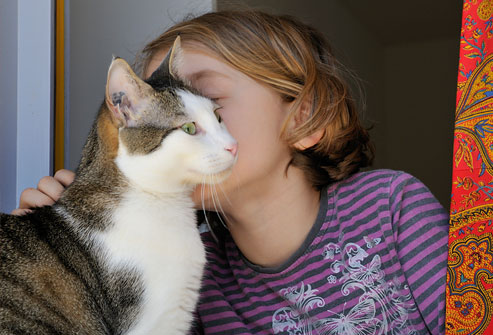
For the roughly 100 million U.S. households that have a cat or dog, this news might trigger immediate concern, and the researchers say that anyone experiencing flu-like symptoms should distance themselves from their pets in much the same way they would from other people. Since this area has been the subject of so little attention, they say that there might be many more undiscovered cases of the flu jumping from humans to pets. “It’s reasonable to assume there are many more cases of this than we know about, and we want to learn more,” Loehr said.

...all of the animals’ symptoms were similar to that of humans -- they rapidly develop severe respiratory disease, stop eating and some die. Serological studies suggest there is far more exposure to flu virus in cats and dogs than previously known.


Natural and experimental transmission of the H3N2 influenza virus from dogs to cats in South Korea showed the potential for flu viruses to be transmitted among various animal species, Loehr said. It’s unknown if an infected cat or other pet could pass influenza back to humans.
The primary concern in “reverse zoonosis,” as in evolving flu viruses in more traditional hosts such as birds and swine, is that in any new movement of a virus from one species to another, the virus might mutate into a more virulent, harmful or easily transmissible form.
“All viruses can, and do, mutate, but the influenza virus raises special concern because it can change whole segments of its viral sequence fairly easily,” Loehr said. “In terms of hosts and mutations, who’s to say that the cat couldn’t be the new pig? We’d just like to know more about this....”

Realistically, though, the actual number of animals infected is small when compared to the population at large.  The bigger worry is that the flu virus could mutate into a more dangerous form as it is transmitted from humans to animals.  "Anytime you have infection of a virus into a new species, it's a concern, a black box of uncertainty," Loehr noted.
The influenza virus in particular mutates notoriously easily, with entire segments of its genome changing within a generation. The reason that H1N1 was declared a “national emergency” in 2009 was because it was a strain that mutated when it jumped from pigs to humans, raising the possibility that it had taken on a more deadly form that could be transmitted more easily between people.
In a worst-case scenario, the pets we keep in our homes could serve as the same type of mutation-inducing vector—the flu could be passed from human to pet, mutate into a more dangerous form, and then potentially affect both humans and other animals. “In terms of hosts and mutations, who’s to say that the cat couldn’t be the new pig?” Loehr asked. “We don’t know for sure what the implications might be, but we do think this deserves more attention.”
At this point, a word about the "H_N_" designations of influenza viruses is in order.  To simplify it, an influenza virus has 2 main types of large proteins on its outer layer.  They are known as Hemagglutinin and Neuraminidase, thus the "H" and "N".  There are several different varieties of each of these proteins and those are reflected in the numerical designation, such as the H3N8 of dog flu. 

If you've followed any of the coverage of a wide spread influenza outbreak, you'll remember that pigs and birds are always mentioned in the same article.  Going back even further, the place most likely to be at the center of any new form of influenza is China and the rest of southeast Asia...where, interestingly enough, there is the highest concentration of pigs and ducks found anywhere in the world.

...pigs can be infected with both human and avian influenza viruses in addition to swine influenza viruses. Infected pigs get symptoms similar to humans, such as cough, fever and runny nose. Because pigs are susceptible to avian, human and swine influenza viruses, they potentially may be infected with influenza viruses from different species (e.g., ducks and humans) at the same time. If this happens, it is possible for the genes of these viruses to mix and create a new virus. For example, if a pig were infected with a human influenza virus and an avian influenza virus at the same time, the viruses could mix (reassort) and produce a new virus that had most of the genes from the human virus, but a hemagglutinin and/or neuraminidase from the avian virus. The resulting new virus would likely be able to infect humans and spread from person to person, but it would have surface proteins (hemagglutinin and/or neuraminidase) not previously seen in influenza viruses that infect humans. If this new virus causes illness in people and can be transmitted easily from person to person, an influenza pandemic can occur.
Key Facts About Canine Influenza (Dog Flu)
Questions and Answers
What is canine influenza (dog flu) ?
Dog flu is a contagious respiratory disease in dogs caused by a specific Type A influenza virus referred to as a “canine influenza virus.” This is a disease of dogs, not of humans.
What is a canine influenza virus?
The “canine influenza virus” is an influenza A H3N8 influenza virus (not a human influenza virus) that was originally an equine (horse) influenza virus. This virus has spread to dogs and can now spread between dogs.
How long has canine influenza been around?
The H3N8 equine influenza virus has been known to exist in horses for more than 40 years. In 2004, however, cases of an unknown respiratory illness in dogs (initially greyhounds) were reported. An investigation showed that this respiratory illness was caused by the equine influenza A H3N8 virus. Scientists believe that this virus jumped species (from horses to dogs) and has now adapted to cause illness in dogs and spread efficiently among dogs. This is now considered a new dog-specific lineage of H3N8. In September of 2005, this virus was identified by experts as “a newly emerging pathogen in the dog population” in the United States.
What are the symptoms of this infection in dogs?
The symptoms of this illness in dogs are cough, runny nose and fever, however, a small proportion of dogs can develop severe disease.
How serious is this infection in dogs?
The number of dogs infected with this disease that die is very small. Some dogs have asymptomatic infections (no symptoms), while some have severe infections. Severe illness is characterized by the onset of pneumonia. Although this is a relatively new cause of disease in dogs and nearly all dogs are susceptible to infection, about 80 percent of dogs will have a mild form of disease.
How does dog flu spread?
Canine influenza virus can be spread by direct contact with aerosolized respiratory secretions from infected dogs, by contact with contaminated objects, and by people moving between infected and uninfected dogs. Therefore, dog owners whose dogs are coughing or showing other signs of respiratory disease should not participate in activities or bring their dogs to facilities where other dogs can be exposed to the virus. Clothing, equipment, surfaces, and hands should be cleaned and disinfected after exposure to dogs showing signs of respiratory disease.
Is there a test for canine influenza?
Testing to confirm canine influenza virus infection is available at veterinary diagnostic centers. The tests can be performed using respiratory secretions collected at the time of disease onset or using two blood samples; the first collected while the animal is sick and the second 2 to 3 weeks later.
How is canine influenza treated?
Treatment largely consists of supportive care. This helps the dog mount an immune response. In the milder form of the disease, this care may include medication to make your dog more comfortable and fluids to ensure that your dog remains well-hydrated. Broad spectrum antibiotics may be prescribed by your veterinarian if a secondary bacterial infection is suspected.
Is there a vaccine for canine influenza?
Yes, an approved vaccine is available.
What is the risk to humans from this virus?
To date, there is no evidence of transmission of canine influenza virus from dogs to people and there has not been a single reported case of human infection with the canine influenza virus. While this virus infects dogs and spreads between dogs, there is no evidence that this virus infects humans.
However, human infections with new influenza viruses (against which the human population has little immunity) would be concerning if they occurred. Influenza viruses are constantly changing and it is possible for a virus to change so that it could infect humans and spread easily between humans. Such a virus could represent a pandemic influenza threat. For this reason, the Centers for Disease Control and its partners are monitoring the H3N8 influenza virus (as well as other animal influenza viruses) along with instances of possible human exposure to these viruses very closely. In general, however, canine influenza viruses are considered to pose a low threat to humans. As mentioned earlier, while these viruses are well established in horse and dog populations, there is no evidence of infection among humans with this virus.
My dog has a cough, what should I do?
Schedule an appointment with your veterinarian so that they can evaluate your dog and recommend an appropriate course of treatment.
Adapted from: http://www.cdc.gov/flu/canine/

Be sure to think about all of this if anyone in your household comes down with the flu this winter.


SPORTS NEWS

The Ohio State Buckeyes should most likely move up to the #3 spot in the AP College Football poll this week now that Alabama has defeated Georgia.  It's really a moot point since we are finishing our 1 year on probation and cannot play for the National Championship this year...but, it's still nice to be considered near the top of any of these lists.  This will give us a big boost as we look forward to the 2013 season.  Our basketball team is still in the Top 5 as well, so all is good in Columbus.

I wasn't going to mention the Pittsburgh Steelers until they started playing like the season meant something to them.  Well, today they did just that...they came from behind in the 4th quarter to beat the Ravens...in Baltimore, no less...something no team has done for 2 years.  With our injured starters starting to return to the line-up, we just might have a decent shot at the playoffs.


PERSONAL STUFF

Desperado and Helpful Buckeye saw the movie, Lincoln, this week and were very impressed with the way the film depicted the internal struggles that went on during the Civil War.  In addition, much of the movie was filmed in and around Richmond, VA, the capital of the Confederacy, and we recognized many of the local sites from our 25 years there.

With the beginning of December, Desperado and Helpful Buckeye are ready to begin our medley of good old Christmas movies that we watch each year.  We always begin with Holiday Inn, starring Bing Crosby and Fred Astaire and then watch about 9 more until Christmas Day.  Also, I put together a new music portfolio of about 15 hours of Holiday music on Windows Media Player.  You might not think there'd be any new Holiday music, but you'd be wrong.  We listened to some of it tonight and it was great!

~~The goal of this blog is to provide general information and advice to help you be a better pet owner and to have a more rewarding relationship with your pet. This blog does not intend to replace the professional one-on-one care your pet receives from a practicing veterinarian. When in doubt about your pet's health, always visit a veterinarian.~~


Monday, November 16, 2009

UPPER RESPIRATORY DISEASE AND YOUR CAT....

Media coverage and conversation just can't seem to get away from the "flu"...both the annual influenzas and H1N1 (Swine Flu). We are presented with a barrage of information, ranging from the availability of vaccines to mortality statistics to more crossovers of H1N1 from humans to cats and ferrets. Where will it end? Influenza viruses have been around for a long time and have been shown to be very active in their evolutionary development. As these viruses evolve, they can present new challenges to their respective hosts. That's the main reason for the variations necessary in your yearly flu vaccine.

Now that influenza viruses have shown up in dogs and cats, a new diagnostic and medical challenge awaits those who care for these pets. In much the same manner as humans trying to tell the difference between the flu and a good, "old-fashioned" cold, a pet owner might be confused between a typical upper respiratory disease and one of the newer influenza infections. Dog Influenza (http://questionsondogsandcats.blogspot.com/2009/08/dogs-get-flu-too.html) might be initially confused with Kennel Cough, which Helpful Buckeye discussed in last week's issue of Questions On Dogs and Cats (http://questionsondogsandcats.blogspot.com/2009/11/kennel-cough-and-your-dog.html). Likewise, a cat that has contracted H1N1...Swine Flu, as did a cat recently in Iowa, may be hard to distinguish from a cat suffering from Upper Respiratory Disease Complex.

As Helpful Buckeye has advocated since our first issue of Questions On Dogs and Cats, back in May 2008, a well-informed pet owner will make much better decisions concerning the health of their dogs and cats. This week's issue will present an overview of upper respiratory diseases in cats.


Helpful Buckeye received several e-mails about last week's topic of Kennel Cough in dogs, most of which were nicely summarized by this comment from "K" in Singapore: "I'm writing in regards to your article on kennel cough. The article is very helpful and I wish I had known more about it before my pups caught it." Hopefully, our readers will pick up several tidbits of helpful knowledge each week that will help them to either prevent or avoid many of the diseases that confront our dogs and cats.

Our poll question from last week produced 24 responses, both online and by e-mail. There were 14 respondents who have had a dog diagnosed with kennel cough and 10 who were really fortunate to have avoided this aggravating disease. Remember to answer this week's poll question in the column to the left.

CURRENT NEWS OF INTEREST

1) In keeping with our opening theme, the Mayo Clinic had presented this comparison for use in determining whether you might have the flu or just a cold: http://www.mayoclinic.com/health/flu-symptoms/FU00013

2) The ASPCA has announced a new research effort directed at Canine Influenza:

Groundbreaking Canine Influenza Study Spearheaded by ASPCA

Last week, the ASPCA announced the launch of a three-year research study of the Canine Influenza Virus, a highly contagious respiratory illness. Funded by the Morris Animal Foundation, the groundbreaking study—conducted by Dr. Miranda Spindel, ASPCA Director of Veterinary Outreach, and Dr. Gabriele Landolt of Colorado State University's Department of Clinical Sciences—will help animal shelters develop effective testing and control methods to limit the transmission of the disease. "Canine influenza is a newly emerging disease that does not discriminate by breed or age," says Dr. Spindel. "The virus is easily transmitted between dogs housed in close contact with each other, and is especially problematic for animal shelters. This study seeks to address this vulnerable population.” First identified as a respiratory pathogen in 2004, CIV has spread widely among dogs in the United States. The virus is transmitted in droplets created by coughing and sneezing, and other symptoms include fever, rapid breathing, loss of appetite and lethargy. With proper and timely treatment, the disease’s fatality rate is quite low.

DISEASES, AILMENTS, AND MEDICAL CONDITIONS

Following the discussion last week of Kennel Cough in dogs, Helpful Buckeye got several e-mails from cat owners inquiring about whether cats can catch Kennel Cough and if there are comparable diseases in cats. The answer to the first question, at least for now, is a simple "No" and "Yes"....

By that, "No" means that the Kennel Cough complex of infectious agents has not been shown to occur in cats; however, the "Yes" refers to recent findings of the Bordetella bronchiseptica bacteria being discovered in the upper respiratory tract of a few cats. So, until some involvement of the Parainfluenza virus is established, cats will not be afflicted with Kennel Cough.

The answer to the second question is a most definite "Yes." Even though the infectious agents are different, cats do suffer from upper respiratory diseases, some of which present a greater challenge to your cat than Kennel Cough does to your dog.

Feline Upper Respiratory Disease Complex

Feline upper respiratory disease complex includes those illnesses typified by runny nose, conjunctivitis, excessive tear production, salivation, and oral ulcerations. The principal diseases, feline viral rhinotracheitis (FVR) and feline calicivirus (FCV) infections, affect exotic cats as well as domestic species. Feline pneumonitis ( Chlamydophila [formerly known as Chlamydia] psittaci ) appears to be of lesser importance. FVR and FCV are host-specific agents and pose no known human risk of infection. Chlamydophila has been reported to cause conjunctivitis in humans. FVR and FCV account for about 90% of upper respiratory infections in cats and there can actually be simultaneous infection with both viruses.

Natural transmission of these agents occurs by way of aerosol droplets produced by sneezing and coughing, contact with the discharge from the eyes and nose of an infected cat, and contact with contaminated food dishes, hands, and bedding. Cats that have recovered from either of these infections can harbor the virus for months, with FCV being shed continuously and FVR being shed intermittently.

Signs and Symptoms

It can often be impossible to differentiate between infections with FVR and FCV. However, there are several differences that can help identify which infection is present:

  • Sneezing is common with FVR...uncommon with FCV

  • Oral ulcers are rare with FVR...common with FCV

  • FVR rarely progresses to pneumonia...FCV commonly includes pneumonia

  • FVR can cause abortions...FCV does not

  • High fevers (105 degrees) common with FVR...no consistent pattern with FCV

  • Severe loss of appetite with FVR...only mild appetite loss with FCV

  • Severe depression is common with FVR...only mild depression seen with FCV


Chlamydophila infections usually involve conjunctivitis, with some occasional sneezing and fever. They can progress from just a watery eye discharge to that of a mucus and pus combination.
Treatment

As with many viral diseases, treatment for FVR and FCV is mostly symptomatic and supportive. If there are secondary bacterial implications, antibiotics (either oral or for the eyes) may be included in the treatment plan. Supportive treatment would include:

  • Keeping the eyes and nostrils clear of discharge

  • Increasing humidity with a vaporizer...or putting the cat in a closed bathroom with a hot shower running

  • Keeping the cat warm and quiet

  • Correct dehydration by running fluids

  • Force-feeding if necessary...either by running fluids or by installation of a feeding tube


Due to the very contagious nature of these viruses, cats with FVR and FCV usually should not be hospitalized unless they are quite ill and if they can be placed in some type of isolation.

Prevention

Prevention of FVR, FCV, and Chlamydophila can be greatly enhanced by the proper use of vaccinations against these agents. There are several different types of vaccines available and your veterinarian can suggest which will be best for your situation. None of these vaccines is 100% effective as vaccinated cats can still be infected with the viruses. These cats will usually only show very mild forms of the diseases but they can still be chronic carriers. For prevention of these diseases in groups of cats, additional control measures are advised. Routine vaccinations should be given to all cats, while new cats should be vaccinated and kept in isolation for at least three weeks. Multiple-cat households should be kept thoroughly clean, with overcrowding being avoided. Any suspected carriers of these viruses should be removed from the population and kept in isolation.

NON-MEDICAL CONCERNS

1) Part 3 of the ASPCA's winter health tips for your pets is here.

Cat Survives 2-Mile Ride in Car Engine: Points to Winter Danger

Recently, the country was mesmerized by the story of a tan-and-white Tabby cat from the Bronx, NY, who survived an unusual ordeal: a two-mile drive through his northern NYC borough, while stuck inside the engine of an SUV. The stray was so severely wedged inside that the battery and other engine parts had to be removed in order to free him. Though the story has a happy ending—two detectives from the NYPD's Emergency Service Unit pulled the cat, who is now recovering nicely, to safety—the incident points to a winter phenomenon that many felines do not survive.

During the winter, ASPCA experts explain, it’s common for outdoor cats to sleep under the hoods of cars for warmth and protection. Once the motor is started, however, the cat can be injured or killed by the fan or fan belt. One solution is for owners of vehicles to bang loudly on the vehicle hood before starting the engine or blow the horn. This gives a sleeping cat the chance to escape or announce his presence by meowing or moving around.

The danger doesn’t only apply to strays, however. Dr. Stephen Zawistowski, ASPCA Executive Vice President, warns: "For their own benefit and for the benefit of the communities where they live, owned cats should not be allowed to roam freely outdoors."

Pet parents, be aware: there are many other dangers that our animal companions face during winter.


  • Keep your cat inside. When outdoors, felines can freeze, become lost or be stolen, injured or killed. And cats who are allowed to stray are exposed to infectious diseases, including rabies, from other cats, dogs and wildlife.

  • Engine coolant is a lethal poison for dogs and cats. Be sure to thoroughly clean spills from your vehicle, and consider using products that contain propylene glycol rather than ethylene glycol.

  • If your dog is sensitive to the cold due to age, illness or breed type, minimize his time outdoors—briefly take him out, and only to relieve himself. This includes puppies, who can be paper-trained during the colder months rather than housebroken.

  • Never shave your dog down to the skin in winter—a longer coat will provide more warmth. And continue to brush your pet regularly during the winter months. This will remove dead hair and keep the coat clean to ensure better insulation. It will also keep natural oils distributed throughout the coat.


2) Thanksgiving Safety Tips From The ASPCA

‘Tis the season for friends, family and holiday feasts—but also for possible distress for our animal companions. Pets won’t be so thankful if they munch on undercooked turkey or a pet-unfriendly floral arrangement, or if they stumble upon an unattended alcoholic drink. Check out the following tips from ASPCA experts for a fulfilling Thanksgiving that your pets can enjoy, too.

  • Talkin’ Turkey...If you decide to feed your pet a little nibble of turkey, make sure it’s boneless and well-cooked. Don't offer her raw or undercooked turkey, which may contain salmonella bacteria.

  • Sage Advice...Sage can make your Thanksgiving stuffing taste delish, but it and many other herbs contain essential oils and resins that can cause gastrointestinal upset and central nervous system depression to pets if eaten in large quantities. Cats are especially sensitive to the effects of certain essential oils.

  • No Bread Dough...Don't spoil your pet’s holiday by giving him raw bread dough. According to ASPCA experts, when raw bread dough is ingested, an animal's body heat causes the dough to rise in his stomach. As it expands, the pet may experience vomiting, severe abdominal pain and bloating, which could become a life-threatening emergency, requiring surgery.

  • Don't Let Them Eat Cake...If you’re baking up Thanksgiving cakes, be sure your pets keep their noses out of the batter, especially if it includes raw eggs—they could contain salmonella bacteria that may lead to food poisoning.

  • Too Much of a Good Thing...A few small boneless pieces of cooked turkey, a taste of mashed potato or even a lick of pumpkin pie shouldn’t pose a problem. However, don't allow your pets to overindulge, as they could wind up with a case of stomach upset, diarrhea or even worse—an inflammatory condition of the pancreas known as pancreatitis. In fact, it’s best keep pets on their regular diets during the holidays.

  • A Feast Fit for a Kong...While the humans are chowing down, give your cat and dog their own little feast. Offer them rawhide strips, Nylabones or made-for-pet chew bones. Or stuff their usual dinner—perhaps with a few added tidbits of turkey, vegetables (try sweet potato or green beans) and dribbles of gravy—inside a Kong toy. They’ll be happily occupied for awhile, working hard to extract their dinner from the toy.


PRODUCT OF THE WEEK

Check out these dog and cat beds from Dog Gone Smart Bed: http://www.pawnation.com/2009/11/11/pet-product-review-dog-gone-smart-bed-its-smart-for-cats-too/ According to the ad, they are anti-odor, anti-stain, and anti-hair buildup. What more could a pet owner want?

GENERAL INTEREST

1) What better way to get started this week than with a bunch of "crazy" cats? Enjoy their antics at: http://www.evtv1.com/player.aspx?itemnum=15486

2) A Great Dane, named Titan, has been selected as the World's Tallest Dog by Guinness World Records: http://www.pawnation.com/2009/11/13/titan-the-great-dane-named-worlds-tallest-dog/ Helpful Buckeye wonders if this is considered the same as the "biggest" or the "largest" dog in the world. Uncertainty in terminology....

3) Apparently the powers that be in the United Kingdom have decided that it will no longer be tolerated for a dog owner to let their dog become obese. One obese dog was confiscated from his owner and another owner was fined the equivalent of $1900 for allowing his dog to be 100 lb. over its normal weight. Read the news story at: http://www.pawnation.com/2009/11/10/obese-dog-confiscated-from-owner/

4) We always hear about child-proofing a home, but here's your opportunity to learn more about cat-proofing your home: http://www.pawnation.com/2009/11/02/how-to-cat-proof-your-home/ There are 6 areas of interest in the home that this article covers.

5) The United Bamboo Cat Calendar presents some cats in interesting poses, wearing unexpected apparel: http://www.pawnation.com/2009/11/10/united-bamboos-cat-calendar/

6) Cat owners are known to wonder what their cat does all day when home alone. The folks at Purina have taken a first step toward providing some answers. Purina Friskies recently undertook a study to find out what cats do all day when they're home alone. They fitted 50 indoor cats with collar cameras to get a cat's eye view of the world. To learn about their findings, go to: http://www.pawnation.com/2009/11/13/what-do-cats-do-all-day-just-ask-them/

7) This past Tuesday, 10 November, was the 26th birthday of Microsoft's Windows operating system. The first Windows operating system was released in 1983 and has gone through many upgrades, with Windows 7 just being released back in October. Most of us are using Windows, for better or for worse, as we share our interests in dogs and cats.

SPORTS NEWS
The Pittsburgh Steelers ran into an unexpectedly tough Cincinnati Bengal team today and lost the game, for their second loss to the Bengals this year. Perhaps the Bengals are for real? This loss puts a slight damper on playoff considerations.

The San Antonio Spurs are still close to the lead in their division, which isn't too bad considering they have been without Tim Duncan and Tony Parker.

PERSONAL STUFF

The Four Musketeers galloped into Scottsdale, AZ, and toured Frank Lloyd Wright's Taliesin West this past week on a beautiful day.
From Robert Louis Stevenson, Scottish novelist and poet: "A friend is a gift you give to yourself"...Aramis, Porthos, Athos, and d'Artagnan....

Robert Louis Stevenson also contributed this quote, which reflects part of our stated goal for Questions On Dogs and Cats: "All speech, written or spoken, is a dead language, until it finds a willing and prepared hearer." Helpful Buckeye strives to help our readers be "willing and prepared hearers" so that your dogs and cats can benefit from your knowledge.

~~The goal of this blog is to provide general information and advice to help you be a better pet owner and to have a more rewarding relationship with your pet. This blog does not intend to replace the professional one-on-one care your pet receives from a practicing veterinarian. When in doubt about your pet's health, always visit a veterinarian.~~

Sunday, August 23, 2009

DOGS GET THE FLU TOO....

Now that the American public has been inundated with information on Swine Flu and indoctrinated as to its potential severity, we find out that Swine Flu is really just like the common flu we've known for years. Most communities, schools, and health departments are not even going to be doing any tests for Swine Flu, figuring that it doesn't make sense to waste resources to find out what it is, if the treatment is the same as for the traditional flu.

Virologists and epidemiologists have been and will continue to be vigilant for influenza viruses that cross species barriers (Avian Flu, Swine Flu) since they are more likely to cause problems of major proportions. With that thought in mind, dog owners might now be confronted with a relatively new influenza virus that represents a very rare event in adaptive evolution: the entire sequence of genetic information of the equine influenza virus was transferred to dogs and the virus adapted to the canine species to emerge as a new canine-specific virus (photo from Ken, in Flagstaff):

Helpful Buckeye will not attempt to turn all of our readers into virologists (I'm not one either) with this column of Questions On Dogs and Cats; however, it is important that all dog owners be informed as to the development of this new disease and what the current recommendations are. Stay tuned later in this issue for this discussion! Meanwhile, be sure to study this model of the basic Influenza virus:

Our polling question for last week provided some uplifting information. Most of you, as it turns out, have been able to successfully give medicine to your dogs...at a rate of 75%! That's pretty good when you consider how tough some dogs can be when you try to open their mouths. Be sure to answer the polling question this week in the column to the left.

CURRENT NEWS OF INTEREST

1) How many of you, while filling out your income tax returns, have mused about the possibility of deducting your costs of pet health care? Well, if a Congressman from Michigan has his way, that possibility might become a reality. Read about his proposal here: http://www.pawnation.com/2009/08/17/tax-deduction-for-pet-care-proposed/

2) Many cities have tried different approaches to the pet population problem of unwanted litters. Ft. Worth, TX, has instituted a fairly high fee for the registration of intact (not neutered or spayed) pets and it will be interesting to see if this might be a solution: http://www.akc.org/news/index.cfm?article_id=3928

3) A man in Virginia is attempting to have a court decide if a dog has only the monetary value of its purchase or a greater value, based on emotional attachment. This decision could have some interesting ramifications: http://news.aol.com/article/virginia-court-to-rule-on-value-of/626193?icid=mainhtmlws-maindl5link6http%3A%2F%2Fnews.aol.com%2Farticle%2Fvirginia-court-to-rule-on-value-of%2F626193

4) In preparation for their upcoming pure breed event this Fall, the world's largest showcase of cats and dogs, the Cat Fanciers' Association and the American Kennel Club hope to inspire a little healthy competition by asking you to declare your canine or feline allegiance. You can register your vote here: http://www.akc.org/poll/special/meet_the_breeds.cfm


DISEASES, AILMENTS, AND MEDICAL CONDITIONS

Helpful Buckeye has briefly touched on the subject of Canine (Dog) Influenza in past issues of Questions On Dogs and Cats, at: http://questionsondogsandcats.blogspot.com/search/label/Dog%20Flu%20Virus and http://questionsondogsandcats.blogspot.com/2008/08/have-you-talked-to-your-cat-lately.html

The number of confirmed cases of this flu-like disease has been increasing and it has now been reported in more than half of the 48 contiguous states. In much the same way that humans are being made more aware of the new types of influenza infections, the American Veterinary Medical Association just released this update:


Canine Influenza--August 21, 2009


Causative Agent


Canine Influenza represents a very rare event in adaptive evolution; the entire genome of the equine influenza virus was transferred to dogs, and the virus adapted to the canine species to emerge as a new canine-specific virus. Although the virus spreads readily from dog to dog, there is no evidence to support that it can be transmitted from dogs to humans.


Natural Distribution

The first recognized outbreak of canine influenza is believed to have occurred in racing greyhounds in January 2004 at a track in Florida. From June to August of 2004, outbreaks of respiratory disease were reported at 14 tracks in 6 states (Florida, Texas, Alabama, Arkansas, West Virginia, and Kansas). Between January and May of 2005, outbreaks occurred at 20 tracks in 11 states (Florida, Texas, Arkansas, Arizona, West Virginia, Kansas, Iowa, Colorado, Rhode Island, and Massachusetts). Florida, Colorado, and the New York City region have become endemic for CI (the virus is considered to be established in those areas), and Pittsburgh (PA) and Lexington (KY) may also be emerging as endemic areas. Sporadic seropositive dogs have been found in many other states throughout the nation. As of October 2, 2008, 1,079 cases of canine influenza were confirmed by the Cornell University College of Veterinary Medicine Animal Health Diagnostic Center. At least one case of canine influenza was confirmed in 28 of the 48 contiguous states; no cases were confirmed in Alaska or Hawaii. Because this is a new influenza virus in dogs, they are not expected to have any immunity to canine influenza when first exposed to the virus. If the virus enters a kennel or other closed group of dogs, a high percentage of the dogs will probably become infected, and most of these dogs will show signs of sickness.


Transmission

Canine influenza is spread via air-borne respiratory secretions and contaminated inanimate objects and people moving between infected and uninfected dogs. The incubation period is usually two to five days. Infected dogs shed virus for seven to 10 days after clinical signs first appear. Because this is a newly emerging pathogen, all dogs, regardless of breed or age, are susceptible to infection and have no naturally acquired or vaccine-induced immunity. Approximately 20-25% of infected dogs are expected to show no signs of illness, but can still shed the virus and disseminate the disease. Although most dogs will have a milder form of canine influenza and recover, some may develop severe pneumonia.


Clinical Signs

Virtually all dogs that are exposed become infected with the virus, but approximately 80% of these will develop clinical signs of disease. The approximately 20% of infected dogs that do not exhibit clinical signs of disease can still shed the virus and can spread the infection.
Canine influenza virus causes clinical disease that mimics kennel cough. Clinical disease may be mild or severe.

The majority of infected dogs (80%) exhibit the mild form. In the mild form, the most common clinical sign is a cough that persists for 10 to 21 days despite treatment with antibiotics and cough suppressants. Most dogs have a soft, moist cough, whereas others have a dry cough that is similar to that seen with kennel cough. Many dogs will have a purulent (pus) nasal discharge and a low-grade fever. The nasal discharge is usually caused by secondary bacterial infections.
Some dogs are more severely affected with clinical signs of pneumonia, such as a high-grade fever (104°F to 106°F) and increased respiratory rate and effort.


Diagnosis

To date, there is no reliable rapid test for diagnosis of acute canine influenza virus infection. The most reliable and sensitive method for confirmation of infection is serologic testing. Antibodies to canine influenza virus may be detected in the blood as early as seven days after onset of clinical signs.


Treatment

As for all viral diseases, treatment is largely supportive. Good care and nutrition may assist dogs in mounting an effective immune response. In the milder form of the disease, a thick green nasal discharge most likely represents a secondary bacterial infection that usually resolves quickly after treatment with a broad-spectrum antibiotic. Pneumonia in more severely affected dogs responds best to a combination of broad-spectrum bactericidal antibiotics (to combat secondary bacterial infections) and maintenance of hydration via intravenous administration of fluids.
Currently available antiviral drugs are approved for use in humans only and little is known about their use, effectiveness, and safety in dogs.


Morbidity and Mortality

The morbidity rate (the number of exposed animals that develop disease) associated with canine influenza is estimated at 80%. Deaths occur mainly in dogs with the severe form of disease; the mortality rate is thought to be 1-5% or slightly higher. Higher case fatality rates have been reported in small groups of greyhounds that developed hemorrhagic pneumonia during outbreaks.


Prevention and Control

In veterinary hospitals, boarding and shelter facilities, the canine influenza virus appears to be easily killed by disinfectants commonly used in these facilities, including bleach. Protocols should be established for thoroughly cleaning and disinfecting cages, bowls and other surfaces between uses. Employees should wash their hands with soap and water:


  • before and after handling each dog

  • after coming into contact with dogs' saliva, urine, feces, or blood

  • after cleaning cages

  • upon arriving at and before leaving the facility.


Isolation protocols should be rigorously applied for dogs showing clinical signs of respiratory disease. Clothing, equipment, surfaces and hands should be cleaned and disinfected after exposure to dogs showing signs of respiratory disease. Dog owners whose dogs are coughing or exhibiting other signs of respiratory disease should not participate in activities or bring their dogs to facilities where other dogs can be exposed to the virus.

In May 2009, the USDA approved the licensure of the first influenza vaccine for dogs developed by Intervet/Schering Plough Animal Health Corporation. The canine influenza vaccine contains inactivated whole virus.

The vaccine is intended as an aid in the control of disease associated with Canine Influenza virus infection. Although the vaccine may not prevent infection altogether, trials have shown that the vaccination may significantly reduce the severity and duration of clinical illness, including the incidence and severity of damage to the lungs. In addition, the vaccine reduces the amount of virus shed and shortens the shedding interval; therefore, vaccinated dogs that become infected develop less severe illness and are less likely to spread the virus to other dogs. These benefits are similar to those provided by influenza vaccines used in other species, including humans.

The canine influenza vaccine is a non-core (not yearly) vaccine, and is not recommended for every dog. In general, the vaccine is intended for the protection of dogs at risk for exposure to the virus, which include those that either participate in activities with many other dogs or are housed in communal facilities, particularly where the virus is prevalent. Dogs that may benefit from canine influenza vaccination include those that receive the kennel cough vaccine, because the risk groups are similar. Dog owners should consult with their veterinarian to determine whether their dog's lifestyle includes risks for exposure to the virus, and if the vaccine is appropriate for their dog.

Helpful Buckeye would like to point out these additional facts about Canine Influenza:

  • Unlike human influenza, this infection is not a seasonal infection. It can occur year round.

  • Fortunately, most dogs will recover within 2 weeks without any further health complications.

  • There is no evidence for any breed or age susceptibility for developing pneumonia during this infection.

  • Dogs that mainly stay at home and walk around the neighborhood are at low risk. Dogs in shelters, boarding and training facilities, day care centers, dog shows, veterinary clinics, pet stores, and grooming facilities are at the highest risk for exposure to the virus.

  • In addition to Canine Influenza not infecting humans, there is no documentation that cats have been infected either.


PRODUCT OF THE WEEK

For those of you searching for just the right type of cover for a piece of furniture that will protect it as well, check out this product: http://www.pawnation.com/2009/08/19/sure-fit-quilted-soft-suede-pet-cover-review/


GENERAL INTEREST

1) In what may be an indication of an upcoming featured service for your pets, read this interview with a small animal massage therapist: http://www.pawnation.com/2009/08/18/certified-small-animal-massage-therapist/

2) Some of you must have experienced a "Candid" camera moment with your cat or dog. See what other pet owners have witnessed: http://www.peoplepets.com/photos/funny/caught-on-camera-your-naughty-pets/1

3) There is still enough summer weather remaining to enjoy these "Summer Hot Dogs": http://www.peoplepets.com/photos/funny/summer-hot-dogs-buns-included/2

4) Continuing with that thought, here are "10 Signs It's The Dog Days Of Summer": http://www.peoplepets.com/photos/funny/10-signs-it-s-the-dog-days-of-summer/1

5) Since we're being a little corny this week, there's no reason to stop now! Enjoy these cat-dog hybrids that are someone's fantasy (cursor down the page to see all 13 of them): http://blogs.catster.com/the-cats-meow-a-cat-and-kitten-blog/thursday-thirteen-13-cat-dog-hybrids/2009/08/12/

6) If you think you know your dog breeds, here is a fun quiz for you (sponsored by the AKC): http://www.pawnation.com/2009/08/20/guess-the-breed-quiz/

7) Here's an interesting story about Lacey, a retired police dog, and her adoptive owners in Vermont. From the USA Today: http://www.usatoday.com/life/columnist/pettalk/2009-08-04-laceys-fund_N.htm

SPORTS NEWS


The LA Dodgers continued to have problems beating the St. Louis Cardinals...if we have to face these guys in the playoffs, we will be in trouble.

PERSONAL STUFF

Desperado and Helpful Buckeye saw the movie, Julie & Julia, this week and really enjoyed it! The discussions about food were mouth-watering and the creation of Julie's blog was interesting. We highly recommend it!

In the words of Count Basie, the esteemed jazz band leader, "I'm saying: to be continued, until we meet again. Meanwhile, keep on listening and tapping your feet."
~~The goal of this blog is to provide general information and advice to help you be a better pet owner and to have a more rewarding relationship with your pet. This blog does not intend to replace the professional one-on-one care your pet receives from a practicing veterinarian. When in doubt about your pet's health, always visit a veterinarian.~~